
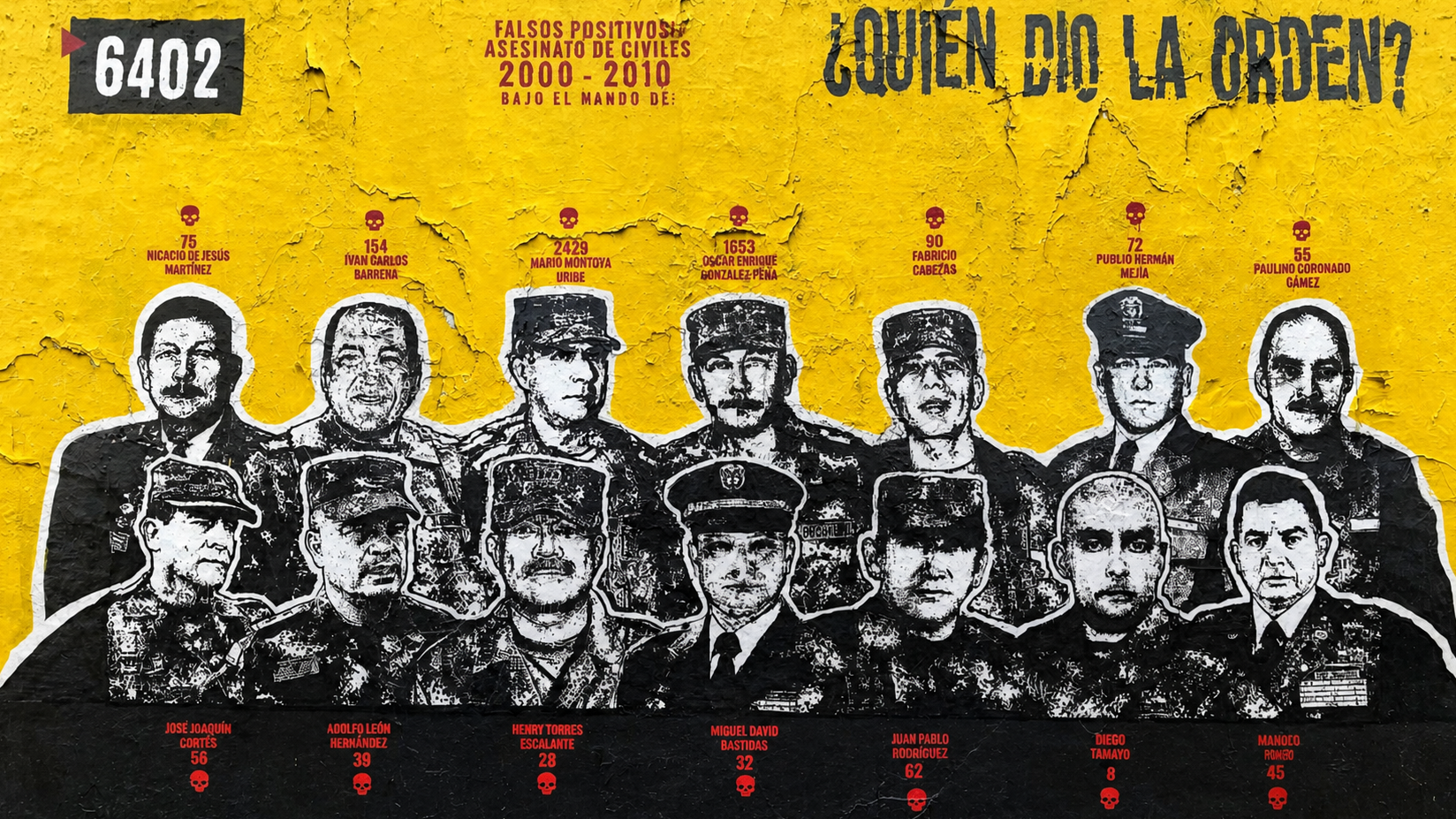
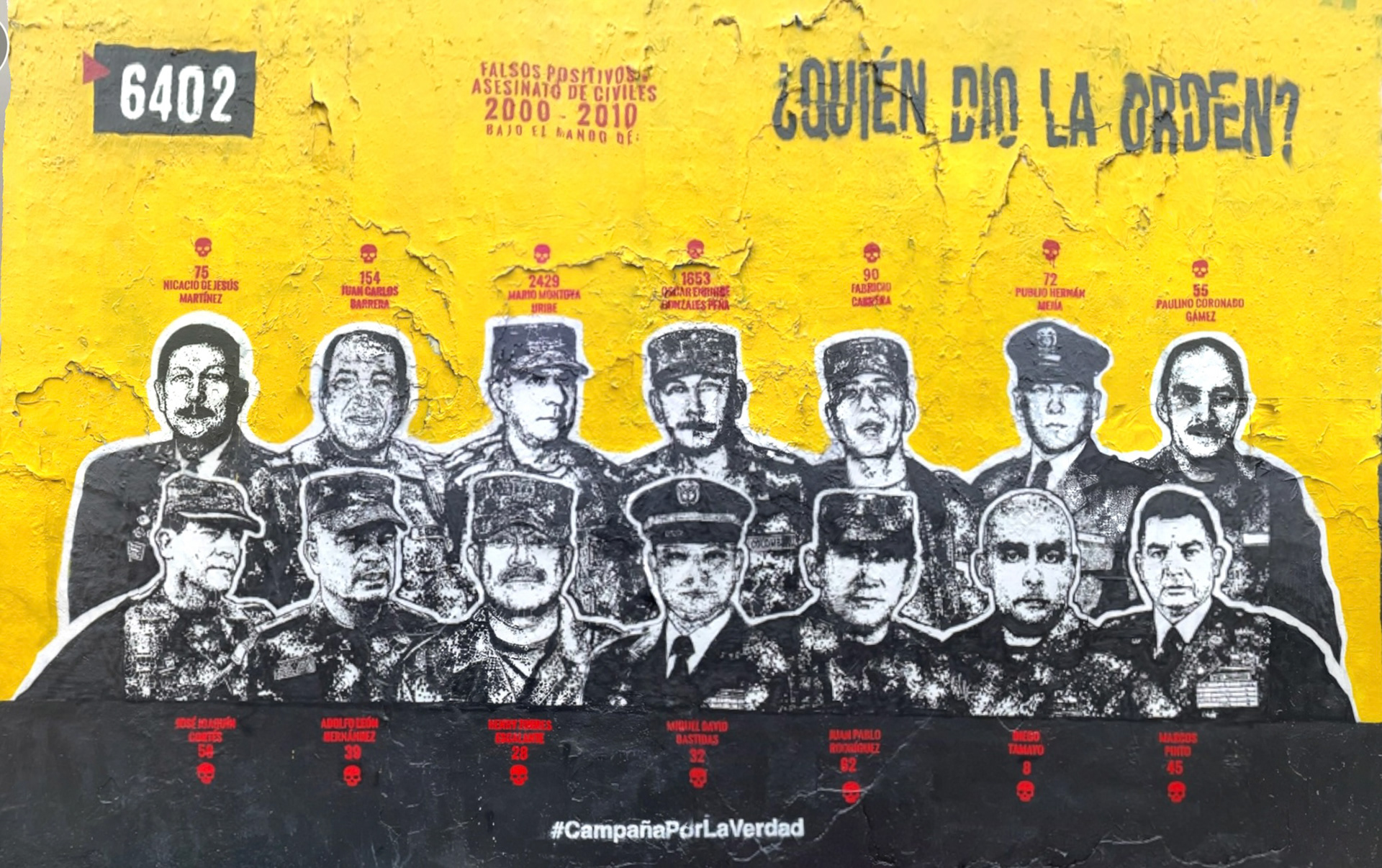
¿Quién dio la orden? mural

¿Quién dio la orden? Digital Homage

About the project

Who Gave the Order? Digital Homage is a three-part transmedia work combining augmented reality, participatory performance and digital animation.

The project addresses the extrajudicial executions known as “Falsos Positivos” in Colombia. Through muralism, puppetry and mobile technologies, it transforms public spaces into places for memory, truth and collective reflection.

Still from the Who Gave the Order? Digital Homage trailer

To play embedded video, open this site through a local web server.

Format
Transmedia work: augmented reality, participatory performance and digital animation
Duration
AR 10–15 min · Video 3 min · Performance approximately 30 min
Platforms
Mobile application and public-space activation
Audience
16+
Languages
Spanish · Multilingual versions
Context
Colombia · International circulation

Historical context

The “Falsos Positivos” were people illegitimately killed and presented as combat casualties by members of Colombia’s armed forces. According to the Special Jurisdiction for Peace, at least 6,402 people were victims of this practice between 2002 and 2008.

The project accompanies the struggle of MAFAPO and the victims’ families to preserve memory, establish the truth and demand justice.

Learn about Case 03 ↗

A work in three parts

01

The Mural

The iconic mural Who Gave the Order? is recreated through augmented reality in the viewer’s physical surroundings.

As visitors move along the mural, digital layers reveal names, figures and archival material. Two virtual puppet journalists guide the experience, explaining the context of the crimes and the continuing search for those responsible.

02

The Magnitude of the Crime

The Magnitude of the Crime is a participatory performance exploring how systematic violence initially attracts public attention but gradually becomes normalized and forgotten.

03

Video Projection

A multilingual digital projection inspired by MAFAPO and the mothers and relatives who continue to demand truth and justice.

The projection places their message directly in public space. AI-assisted animation and multilingual voices allow the work to travel while preserving its connection to Colombia.

Artistic approach

The project combines muralism and puppetry—two popular art forms rooted in political expression and public storytelling. Augmented reality allows the mural to travel and resist physical erasure, while Inocencio and Democracio use satire to make a complex history more accessible.

Characters

Inocencio Calle

Coming from the beaches of Piangüita, Inocencio is a street reporter committed to listening to ordinary people and making social problems visible.

He sees himself as a journalist on the side of the people, although his innocence sometimes leads him to misunderstand situations and create controversy in his reports.

Cerdolfo Democracio

Democracio is a detective reporter and a faithful defender of law and order. After leaving the armed forces, he devoted himself to journalism, but his strong military training still leads him to approach every report as a mission.

He investigates violations of rules and accepted conduct in the streets. His strong temperament turns each report into an action-filled police operation.

Partners and collaborators

The project has been developed in collaboration with organizations, artists and collectives working across memory, independent journalism, human rights and social art.

Logos of the project partners

Support the project

Help us complete the work and bring this experience to new public spaces, cultural institutions and international audiences.